
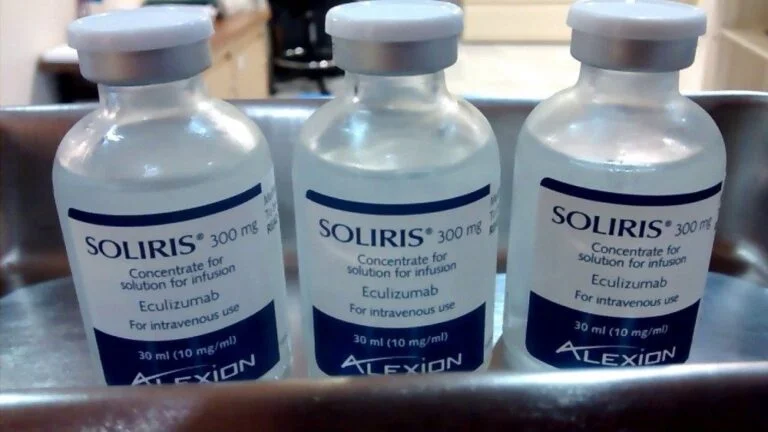
Buy Soliris Online At Bio Chems Zone – Soliris For Sale Online
Soliris the treatment of patients with paroxysmal nocturnal hemoglobinuria (PNH) to reduce hemolysis, the treatment of patients with atypical hemolytic uremic syndrome (aHUS) to inhibit complement-mediated thrombotic microangiopathy, the treatment of adult patients with generalized Myasthenia Gravis (gMG) who are anti-acetylcholine receptor (AchR) antibody positive, and neuromyelitis optica spectrum disorder (NMOSD) in adult patients who are anti-aquaporin-4 (AQP4) antibody positive. SOLIRIS is not indicated for the treatment of patients with Shiga-toxin E. coli-related hemolytic uremic syndrome (STEC-HUS). It is not known if SOLIRIS is safe and effective in children with PNH, or gMG, or NMOSD.
What Soliris Treats
- Paroxysmal nocturnal hemoglobinuria (PNH) in adults to reduce red blood cell breakdown (hemolysis).
- Atypical hemolytic uremic syndrome (aHUS) to inhibit complement-mediated abnormal clotting (excludes Shiga toxin E. coli-related HUS).
- Generalized myasthenia gravis (gMG) in patients aged 6 and older who test positive for anti-acetylcholine receptor (AChR) antibodies.
- Neuromyelitis optica spectrum disorder (NMOSD) in adults who test positive for anti-aquaporin-4 (AQP4) antibodies
Administration & Dosing
- How it is given: Administered as an IV infusion by a healthcare professional (in a clinic, hospital, or via a visiting nurse service).
- Schedule: Typically given weekly for the first few weeks, followed by maintenance infusions every 2 weeks (schedules vary depending on the specific condition and patient body weight).
- Biosimilars and Alternatives: Interchangeable biosimilars like Bkemv (eculizumab-aeeb) exist, as well as longer-acting alternatives like Ultomiris (ravulizumab), which requires less frequent dosing
Important Safety Information & Boxed Warning
- Meningococcal Infections: Soliris carries a Boxed Warning for serious, life-threatening, or fatal meningococcal infections caused by Neisseria meningitidis. Patients must be vaccinated against meningococcal bacteria at least 2 weeks prior to starting treatment.
- Other Infections: It also increases susceptibility to other encapsulated bacteria (such as Streptococcus pneumoniae and Haemophilus influenzae).
- Abrupt Stopping: Do not stop Soliris without consulting a doctor, as stopping can trigger severe relapses or rapid red blood cell breakdown in PNH and aHUS.
- REMS Program: Prescribed under a restricted safety program called the ULTOMIRIS and SOLIRIS REMS
Soliris is a prescription medicine used to treat:
patients with a disease called Paroxysmal Nocturnal Hemoglobinuria (PNH).
adults and children with a disease called atypical Hemolytic Uremic Syndrome (aHUS). SOLIRIS is not for use in treating people with Shiga toxin E. coli related hemolytic uremic syndrome (STEC-HUS).
adults with a disease called generalized myasthenia gravis (gMG) who are anti-acetylcholine receptor (AChR) antibody positive.
adults with a disease called neuromyelitis optica spectrum disorder (NMOSD) who are anti-aquaporin-4 (AQP4) antibody positive.
It is not known if SOLIRIS is safe and effective in children with PNH, gMG, or NMOSD.
IMPORTANT SAFETY INFORMATION
What is the most important information I should know about SOLIRIS?
SOLIRIS is a medicine that affects your immune system and can lower the ability of your immune system to fight infections.
SOLIRIS increases your chance of getting serious and life-threatening meningococcal infections that may quickly become life-threatening and cause death if not recognized and treated early.
You must receive meningococcal vaccines at least 2 weeks before your first dose of SOLIRIS if you are not vaccinated.
If your doctor decided that urgent treatment with SOLIRIS is needed, you should receive meningococcal vaccination as soon as possible.
If you have not been vaccinated and SOLIRIS therapy must be initiated immediately, you should also receive 2 weeks of antibiotics with your vaccinations.
If you had a meningococcal vaccine in the past, you might need additional vaccination. Your doctor will decide if you need additional vaccination.
Meningococcal vaccines reduce but do not prevent all meningococcal infections. Call your doctor or get emergency medical care right away if you get any of these signs and symptoms of a meningococcal infection: headache with nausea or vomiting, headache and fever, headache with a stiff neck or stiff back, fever, fever and a rash, confusion, muscle aches with flu-like symptoms, and eyes sensitive to light.
Your doctor will give you a Patient Safety Card about the risk of meningococcal infection. Carry it with you at all times during treatment and for 3 months after your last SOLIRIS dose. It is important to show this card to any doctor or nurse to help them diagnose and treat you quickly.
Is Soliris a type of chemotherapy?
Soliris (eculizumab) is not a chemotherapy drug, though it is sometimes listed on cancer care resources like Chemocare because it is a potent prescription medication managed through specialized clinical care.


Reviews
There are no reviews yet.