




Buy Keytruda 100mg Injection Online – Keytruda 100mg For Sale Online
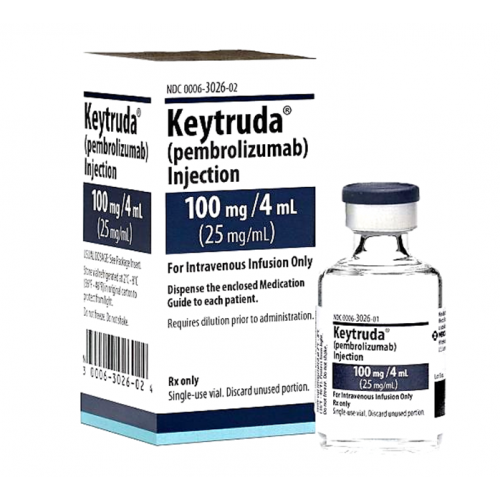
Keytruda 100mg (pembrolizumab) is a prescription immunotherapy medication used to treat various types of cancer by helping your immune system attack cancer cells.
Keytruda 100 mg is the trade name for the drug Pembrolizumab. It is injected into a vein through an IV. Keytruda is a prescription oncology medicine that is given by a health care professional.
Uses and Indications
- Treats numerous cancers including non-small cell lung cancer (NSCLC), melanoma, head and neck cancer, Hodgkin lymphoma, and urothelial carcinoma.
- Administered either alone or combined with chemotherapy or other medicines.
- Requires specific biomarker tests (such as PD-L1 or MSI-H/dMMR status) for certain conditions.
Dosage and Administration
- Supplied as a 100 mg / 4 mL (25 mg/mL) concentrate in a single-dose vial for intravenous infusion.
- Standard adult intravenous dose is typically 200 mg every 3 weeks or 400 mg every 6 weeks, infused over 30 minutes.
- Diluted by a healthcare professional before administration; never given as an IV push or bolus.
Side Effects and Safety
- Common side effects include fatigue, rash, diarrhea, pain, and nausea.
- Can cause severe or life-threatening immune-mediated adverse reactions where the immune system attacks normal organs and tissues.
- Inform your doctor about all current medications, supplements, or prior immunosuppressive therapies.
Keytruda 100 mg is the trade name for the drug Pembrolizumab. It is injected into a vein through an IV. Keytruda is a prescription oncology medicine that is given by a health care professional.
Keytruda 100 mg Injection Uses
Keytruda (Pembrolizumab) is used for the treatment of:
- unresectable or metastatic melanoma.
• metastatic non-small cell lung cancer (NSCLC).
• patients with recurrent or metastatic head and neck squamous cell carcinoma (HNSCC).
• adult and pediatric patients with refractory classical Hodgkin lymphoma (cHL), or those who have relapsed after three or more prior lines of therapy.
• primary mediastinal large B-cell lymphoma (PMBCL).
• certain types of stomach cancer and
• a certain type of cervical cancer.
Keytruda Pembrolizumab 100 mg Injection Work?
In the body, there is a type of white blood cell that watches out for signs of infection or disease and can also assault cancer cells. These white blood cells are called T cells. On the surface of these T cells are certain proteins known as programmed cell death receptors (PD-1). So that T cells don’t destroy healthy cells, they use these surface proteins, or PD-1, to bind to and communicate with PD-L1 and PD-L2, proteins that permit cells to escape attack from the body’s immune system.
In other words, when the PD-1 protein on T cells comes in contact with PD-L1 and PD-L2 proteins, they are given the signal to allow that cell to live and spread. By blocking PD-1, Pembrolizumab increases the ability of your immune system to attack melanoma cells and tumors. This cancer medicine can release T cells so that it can penetrate melanoma anywhere in your body.
Keytruda 100 mg Injection Side – Effects:
This medicine may cause some serious, life-threatening side-effects. This does not mean that everyone who takes it will experience them. It depends on the medicine and how your body reacts. The following are some of the side effects that are known to be associated with this medicine:
Common Side Effects: Cough; Joint pain; Feeling tired; Loss of appetite; Mild diarrhea or constipation; Difficulty falling asleep or staying asleep; Changes in skin color etc.
Serious Side Effects: Chest pain or shortness of breath; New or worsening cough; Pale skin; Easy bruising or bleeding; Severe stomach pain; Bloody or cloudy urine; Swelling in the ankles or feet; Rapid heartbeats; Increased hunger or thirst; Hoarseness; Weight gain or weight loss; Hair loss etc.
These are not all the possible side effects of Pembrolizumab 100mg Injection. If you notice any other side-effects, contact your doctor or pharmacist for further advice.
Keytruda 100 mg Injection – Storage Details:
Many factors can damage your medication, including heat, air, light, and moisture. It’s important to keep in mind that where you store your medication can affect its potency and safety. Following storage instructions will be helpful in storing the drug in the best of manner. Keytruda 100 mg Keytruda 100 mg Keytruda 100 mg
- Store Pembrolizumab Injection in between 2°C to 8°C.
• Store in original carton in refrigerator (35 to 46 degrees F) until time of use
• Keep this anti-cancer drug in a safe place so that children & pets cannot reach it.
• Keep your medicines separate from your spouse or other family members. This will make it less likely that you take the wrong ones by mistake. Keytruda 100 mg Keytruda 100 mg Keytruda 100 mg
• Discard Keytruda if it contains particulate matter, is cloudy, or discolored.
FDA-Approved Indications for KEYTRUDA® (pembrolizumab) and KEYTRUDA QLEX™ (pembrolizumab and berahyaluronidase alfa-pmph)
KEYTRUDA and KEYTRUDA QLEX are prescription medicines used to treat:
- a kind of lung cancer called non–small cell lung cancer (NSCLC).
-
- Each may be used in combination with chemotherapy that contains platinum and another chemotherapy medicine before surgery when you have early-stage NSCLC, which can be removed by surgery, and then continued alone after surgery to help prevent your lung cancer from coming back.
- Each may be used with the chemotherapy medicines pemetrexed and a platinum as your first treatment when your lung cancer has spread (advanced NSCLC) and is a type called “nonsquamous” and your tumor does not have an abnormal “EGFR” or “ALK” gene.
- Each may be used with the chemotherapy medicines carboplatin and either paclitaxel or paclitaxel protein-bound as your first treatment when your lung cancer has spread (advanced NSCLC) and is a type called “squamous.”
- Each may be used alone as your first treatment when your lung cancer has not spread outside your chest (stage III) and you cannot have surgery or chemotherapy with radiation, or your NSCLC has spread to other areas of your body (advanced NSCLC), and your tumor tests positive for “PD‑L1” and does not have an abnormal “EGFR” or “ALK” gene.
- Each may also be used alone for advanced NSCLC if you have tried chemotherapy that contains platinum and it did not work or is no longer working and, your tumor tests positive for “PD-L1” and if your tumor has an abnormal “EGFR” or “ALK” gene, you have also received an “EGFR” or “ALK” inhibitor medicine that did not work or is no longer working.
- Each may be used as a treatment in adults for your lung cancer to help prevent your lung cancer from coming back after your tumor(s) has been removed by surgery and you have received platinum-based chemotherapy, and you have stage IB and your tumor(s) is 4 cm or greater in size, stage II, or stage IIIA NSCLC.
It is not known if KEYTRUDA and KEYTRUDA QLEX are safe and effective for these uses in children.
-
- a kind of skin cancer called melanoma.
-
- Each may be used when your melanoma has spread or cannot be removed by surgery (advanced melanoma).
It is not known if KEYTRUDA and KEYTRUDA QLEX are safe and effective in children with advanced melanoma.
-
- Each may be used in adults and children 12 years of age and older with stage IIB, stage IIC, or stage III melanoma, to help prevent melanoma from coming back after it and lymph nodes that contain cancer have been removed by surgery.
It is not known if KEYTRUDA and KEYTRUDA QLEX are safe and effective in children younger than 12 years of age with melanoma.
-
- a kind of cancer called head and neck squamous cell cancer (HNSCC).
-
- Each may be used alone in adults with HNSCC before surgery when your cancer can be removed by surgery, has spread to nearby tissues, and your tumor tests positive for “PD-L1,” and then continued in combination with radiation with or without cisplatin after surgery, and then continued alone to help prevent your head and neck cancer from coming back.
- Each may be used with the chemotherapy medicines fluorouracil and a platinum as your first treatment when your head and neck cancer has spread or returned and cannot be removed by surgery.
- Each may be used alone as your first treatment when your head and neck cancer has spread or returned and cannot be removed by surgery, and your tumor tests positive for “PD‑L1.”
- Each may be used alone when your head and neck cancer has spread or returned, and you have received chemotherapy that contains platinum and it did not work or is no longer working.
It is not known if KEYTRUDA and KEYTRUDA QLEX are safe and effective for these uses in children.
-
- a kind of bladder and urinary tract cancer called urothelial cancer.
-
- Each may be used with the medicine enfortumab vedotin-ejfv in adults when your bladder or urinary tract cancer has spread or cannot be removed by surgery (locally advanced or metastatic urothelial cancer).
- Each may be used alone when your bladder or urinary tract cancer has spread or cannot be removed by surgery (locally advanced or metastatic urothelial cancer), and you are not able to receive chemotherapy that contains platinum (medicines called either cisplatin or carboplatin).
- Each may be used alone when your bladder or urinary tract cancer has spread or cannot be removed by surgery (locally advanced or metastatic urothelial cancer), and you have received chemotherapy that contains platinum, and it did not work or is no longer working.
- Each may be used with the medicine enfortumab vedotin-ejfv in adults before and after the surgical removal of your bladder when your bladder cancer has spread into the muscle layer of the bladder (muscle invasive bladder cancer [MIBC]) but not to other parts of the body.
- Each may be used alone when your cancer has not spread to nearby tissue in the bladder, but is at high-risk for spreading (high-risk, non-muscle invasive bladder cancer [NMIBC]) and when your tumor is a type called “carcinoma in situ” (CIS), and you have tried treatment with Bacillus Calmette-Guerin (BCG) and it did not work, and you are not able to or have decided not to have surgery to remove your bladder.
It is not known if KEYTRUDA and KEYTRUDA QLEX are safe and effective for these uses in children.
-
- a kind of cancer that is shown by a laboratory test to be a microsatellite instability-high (MSI‑H) or a mismatch repair deficient (dMMR) solid tumor. Each may be used in adults to treat:
-
- cancer that has spread or cannot be removed by surgery (advanced cancer), and
- has progressed following treatment, and you have no satisfactory treatment options.
KEYTRUDA also may be used to treat children with this kind of cancer, and KEYTRUDA QLEX also may be used to treat children 12 years and older.
It is not known if KEYTRUDA QLEX is safe and effective for this use in children younger than 12 years of age.
-
- a kind of cancer called colon or rectal cancer. Each may be used when your cancer:
-
- has spread or cannot be removed by surgery (advanced colon or rectal cancer), and
- has been shown by a laboratory test to be microsatellite instability-high (MSI-H) or mismatch repair deficient (dMMR).
It is not known if KEYTRUDA and KEYTRUDA QLEX are safe and effective for these uses in children.
-
- a kind of stomach cancer called gastric or gastroesophageal junction (GEJ) adenocarcinoma.
-
- Each may be used in adults in combination with fluoropyrimidine and platinum chemotherapy as your first treatment when your stomach cancer:
- is HER2-negative, and your tumor tests positive for “PD-L1,” and
- has spread or cannot be removed by surgery (advanced gastric cancer).
- Each may be used in adults in combination with fluoropyrimidine and platinum chemotherapy as your first treatment when your stomach cancer:
It is not known if KEYTRUDA and KEYTRUDA QLEX are safe and effective for this use in children.
-
- a kind of cancer called esophageal or certain gastroesophageal junction (GEJ) carcinomas that cannot be cured by surgery or a combination of chemotherapy and radiation therapy.
-
- Each may be used in combination with platinum- and fluoropyrimidine-based chemotherapy medicines when your tumor tests positive for “PD-L1.”
- Each may be used alone when:
- you have received one or more types of treatment, and it did not work or it is no longer working, and
- your tumor is a type called “squamous,” and
- your tumor tests positive for “PD-L1.”
It is not known if KEYTRUDA and KEYTRUDA QLEX are safe and effective for these uses in children.
-
- a kind of cancer called cervical cancer.
-
- Each may be used with chemotherapy and radiation therapy when your cervical cancer has spread nearby to the lower part of your vagina or to pelvic organs or has affected your kidneys (Stage III to IVA FIGO 2014 classification).
- Each may be used with chemotherapy medicines, with or without the medicine bevacizumab, when:
- your cervical cancer does not go away (persistent), has returned, or has spread (advanced cervical cancer), and
- your tumor tests positive for “PD-L1.”
- Each may be used alone when your cervical cancer:
- has returned, or has spread (advanced cervical cancer), and
- you have received chemotherapy, and it did not work or is no longer working, and
- your tumor tests positive for “PD‑L1.”
It is not known if KEYTRUDA and KEYTRUDA QLEX are safe and effective for these uses in children.
-
- a kind of kidney cancer called renal cell carcinoma (RCC).
-
- Each may be used alone if you are at intermediate-high or high risk of your kidney cancer (RCC) coming back after surgery to:
- remove all or part of your kidney, or
- remove all or part of your kidney and also surgery to remove cancer that has spread to other parts of the body (metastatic lesions).
- Each may be used alone if you are at intermediate-high or high risk of your kidney cancer (RCC) coming back after surgery to:
It is not known if KEYTRUDA and KEYTRUDA QLEX are safe and effective for this use in children.
-
- a kind of uterine cancer called advanced endometrial carcinoma.
-
- Each may be used with the chemotherapy medicines carboplatin and paclitaxel, and then may be used alone, in adults:
- when your cancer has spread (advanced), or
- if your cancer has returned.
- Each may be used with the chemotherapy medicines carboplatin and paclitaxel, and then may be used alone, in adults:
It is not known if KEYTRUDA and KEYTRUDA QLEX are safe and effective for this use in children.
-
- a kind of skin cancer called cutaneous squamous cell carcinoma (cSCC). Each may be used when your skin cancer has returned or spread, and cannot be cured by surgery or radiation.
It is not known if KEYTRUDA and KEYTRUDA QLEX are safe and effective for this use in children.
- a kind of cancer called triple-negative breast cancer (TNBC).
-
- Each may be used with chemotherapy medicines as treatment before surgery and then continued alone after surgery when you have early-stage breast cancer, and are at high risk of your breast cancer coming back (high-risk early-stage triple-negative breast cancer [TNBC]).
- Each may be used with the medicine sacituzumab govitecan-hziy in adults as your first treatment when your breast cancer cannot be removed by surgery, has spread to nearby tissues (locally advanced) or other parts of the body (metastatic), and tests positive for “PD-L1.”
- Each may be used with chemotherapy medicines when your breast cancer has returned to nearby tissues and cannot be removed by surgery or has spread (advanced TNBC), and tests positive for “PD-L1.”
It is not known if KEYTRUDA and KEYTRUDA QLEX are safe and effective for these uses in children.
-
- a kind of cancer called ovarian cancer.
-
- Each may be used in adults with the chemotherapy medicine paclitaxel, with or without the medicine bevacizumab, when your ovarian, fallopian tube, or primary peritoneal cancer:
- is resistant to chemotherapy that contains platinum, and
- tests positive for “PD-L1,” and
- you have received 1 or 2 types of treatment.
- Each may be used in adults with the chemotherapy medicine paclitaxel, with or without the medicine bevacizumab, when your ovarian, fallopian tube, or primary peritoneal cancer:
It is not known if KEYTRUDA and KEYTRUDA QLEX are safe and effective for this use in children.
-
PD-L1 = programmed death ligand 1;
EGFR = epidermal growth factor receptor;
ALK = anaplastic lymphoma kinase;
FIGO = International Federation of Gynecology and Obstetrics;
HER2 = human epidermal growth factor receptor 2.
Important Safety Information
Do not receive KEYTRUDA QLEX if you are allergic to berahyaluronidase, hyaluronidase or any of the inactive ingredients in KEYTRUDA QLEX.
KEYTRUDA and KEYTRUDA QLEX are medicines that may treat certain cancers by working with your immune system. KEYTRUDA and KEYTRUDA QLEX can cause your immune system to attack normal organs and tissues in any area of your body and can affect the way they work. These problems can sometimes become severe or life-threatening and can lead to death. You can have more than one of these problems at the same time. These problems may happen any time during treatment or even after your treatment has ended.
Call or see your health care provider right away if you develop any signs or symptoms of the following problems or if they get worse. These are not all of the signs and symptoms of immune system problems that can happen with KEYTRUDA or KEYTRUDA QLEX:
Lung problems: cough, shortness of breath, or chest pain.
Intestinal problems: diarrhea (loose stools) or more frequent bowel movements than usual; stools that are black, tarry, sticky, or have blood or mucus; or severe stomach-area (abdomen) pain or tenderness.
Liver problems: yellowing of your skin or the whites of your eyes; severe nausea or vomiting; pain on the right side of your stomach area (abdomen); dark urine (tea colored); or bleeding or bruising more easily than normal.
Hormone gland problems: headaches that will not go away or unusual headaches; eye sensitivity to light; eye problems; rapid heartbeat; increased sweating; extreme tiredness; weight gain or weight loss; feeling more hungry or thirsty than usual; urinating more often than usual; hair loss; feeling cold; constipation; your voice gets deeper; dizziness or fainting; changes in mood or behavior, such as decreased sex drive, irritability, or forgetfulness.
Kidney problems: decrease in the amount of your urine; blood in your urine; swelling of your ankles; loss of appetite.
Skin problems: rash; itching; skin blistering or peeling; painful sores or ulcers in your mouth or in your nose, throat, or genital area; fever or flu-like symptoms; swollen lymph nodes.
Problems can also happen in other organs and tissues. Signs and symptoms of these problems may include: chest pain; irregular heartbeat; shortness of breath; swelling of ankles; confusion; sleepiness; memory problems; changes in mood or behavior; stiff neck; balance problems; tingling or numbness of the arms or legs; double vision; blurry vision; sensitivity to light; eye pain; changes in eyesight; persistent or severe muscle pain or weakness; muscle cramps; low red blood cells; bruising.
Infusion, injection-related, and allergic reactions that can sometimes be severe or life-threatening. Signs and symptoms of infusion, injection-related, and allergic reactions may include chills or shaking, itching or rash, flushing, shortness of breath or wheezing, dizziness, feeling like passing out, fever, and back pain.
Rejection of a transplanted organ or tissue. Your health care provider should tell you what signs and symptoms you should report and they will monitor you, depending on the type of organ or tissue transplant that you have had.
Complications, including graft-versus-host disease (GVHD), in people who have received a bone marrow (stem cell) transplant that uses donor stem cells (allogeneic). These complications can be serious and can lead to death. These complications may happen if you underwent transplantation either before or after being treated with KEYTRUDA or KEYTRUDA QLEX. Your health care provider will monitor you for these complications.
Getting medical treatment right away may help keep these problems from becoming more serious. Your health care provider will check you for these problems during treatment with KEYTRUDA or KEYTRUDA QLEX. They may treat you with corticosteroid or hormone replacement medicines. They may also need to delay or completely stop treatment with KEYTRUDA and KEYTRUDA QLEX if you have severe side effects.
Before you receive KEYTRUDA or KEYTRUDA QLEX, tell your health care provider if you have immune system problems such as Crohn’s disease, ulcerative colitis, or lupus; have had an organ or tissue transplant, including corneal transplant, or have had or plan to have a bone marrow (stem cell) transplant that uses donor stem cells (allogeneic); have had radiation treatment in your chest area; have a condition that affects your nervous system, such as myasthenia gravis or Guillain-Barré syndrome.
If you are pregnant or plan to become pregnant, tell your health care provider. KEYTRUDA and KEYTRUDA QLEX can harm your unborn baby. If you are able to become pregnant, you will be given a pregnancy test before you start treatment. Use effective birth control during treatment with KEYTRUDA or KEYTRUDA QLEX and for 4 months after your last dose of KEYTRUDA or KEYTRUDA QLEX. Tell them right away if you think you may be pregnant or you become pregnant during treatment with KEYTRUDA or KEYTRUDA QLEX.
Tell your health care provider if you are breastfeeding or plan to breastfeed. It is not known if KEYTRUDA or KEYTRUDA QLEX passes into your breast milk. Do not breastfeed during treatment with KEYTRUDA or KEYTRUDA QLEX and for 4 months after your last dose of KEYTRUDA or KEYTRUDA QLEX.
Tell your health care provider about all the medicines you take, including prescription and over-the-counter medicines, vitamins, and herbal supplements.
The most common side effects of KEYTRUDA QLEX when given with certain chemotherapy medicines include nausea; tiredness; and muscle, bone, and joint pain.
The most common side effects observed with KEYTRUDA when used alone, which may be experienced with KEYTRUDA QLEX, include feeling tired; pain, including pain in muscles; rash; diarrhea; fever; cough; decreased appetite; itching; shortness of breath; constipation; bones or joints and stomach-area (abdominal) pain; nausea; and low levels of thyroid hormone.
The most common side effects observed with KEYTRUDA when used alone that are more common in children than adults, which may be experienced with KEYTRUDA QLEX, include fever, vomiting, headache, stomach area (abdominal) pain, and low levels of white blood cells and red blood cells (anemia).
The most common side effects observed with KEYTRUDA when given with certain chemotherapy or chemotherapy with radiation therapy medicines, which may be experienced with KEYTRUDA QLEX, include feeling tired or weak; nausea; constipation; diarrhea; decreased appetite; rash; vomiting; cough; trouble breathing; fever; hair loss; inflammation of the nerves that may cause pain, weakness, and paralysis in the arms and legs; swelling of the lining of the mouth, nose, eyes, throat, intestines, or vagina; mouth sores; headache; weight loss; stomach-area (abdominal) pain; joint and muscle pain; trouble sleeping; blisters or rash on the palms of your hands and soles of your feet; urinary tract infection; low levels of thyroid hormone; skin irritation in the radiation area; trouble swallowing; and dry mouth.
The most common side effects observed with KEYTRUDA when given with enfortumab vedotin-ejfv, which may be experienced with KEYTRUDA QLEX, include rash; tingling or numbness of the arms or legs; feeling tired or weak; itching; diarrhea; hair loss; weight loss; decreased appetite; dry eye; nausea; constipation; changes in sense of taste; and urinary tract infection.
The most common side effects observed with KEYTRUDA when given with chemotherapy and bevacizumab, which may be experienced with KEYTRUDA QLEX, include tingling or numbness of the arms or legs; hair loss; low red blood cell count; feeling tired or weak; nausea; low white blood cell count; diarrhea; high blood pressure; decreased platelet count; constipation; joint aches; vomiting; urinary tract infection; rash; low levels of thyroid hormone; decreased appetite; fever; mouth sores; and nosebleed.
The most common side effects observed with KEYTRUDA when given with sacituzumab govitecan-hziy, which may be experienced with KEYTRUDA QLEX, include low red blood cell count, low white blood count, diarrhea, nausea, feeling tired or weak, hair loss, constipation, rash, vomiting, headache, and abdominal pain.
These are not all the possible side effects of KEYTRUDA or KEYTRUDA QLEX. Talk to your health care provider for medical advice about side effects.










Reviews
There are no reviews yet.